Tag: Seabirds

  • It’s Nearly Time Again

    It’s Nearly Time Again

    Here we are in the middle of a gloomy February in the UK. The rain seems to have been relentless throughout January and has not improved yet this month. There are over 100 flood warnings live and it’s due to turn even colder this coming weekend – but still with only one day of sun forecast.

    And yet…

    Just four or five short weeks away and these wonderful birds will begin to return to their breeding colonies around the UK. The nearest to me are at Flamborough and Bempton, I’ve certainly seen the birds there from mid March.
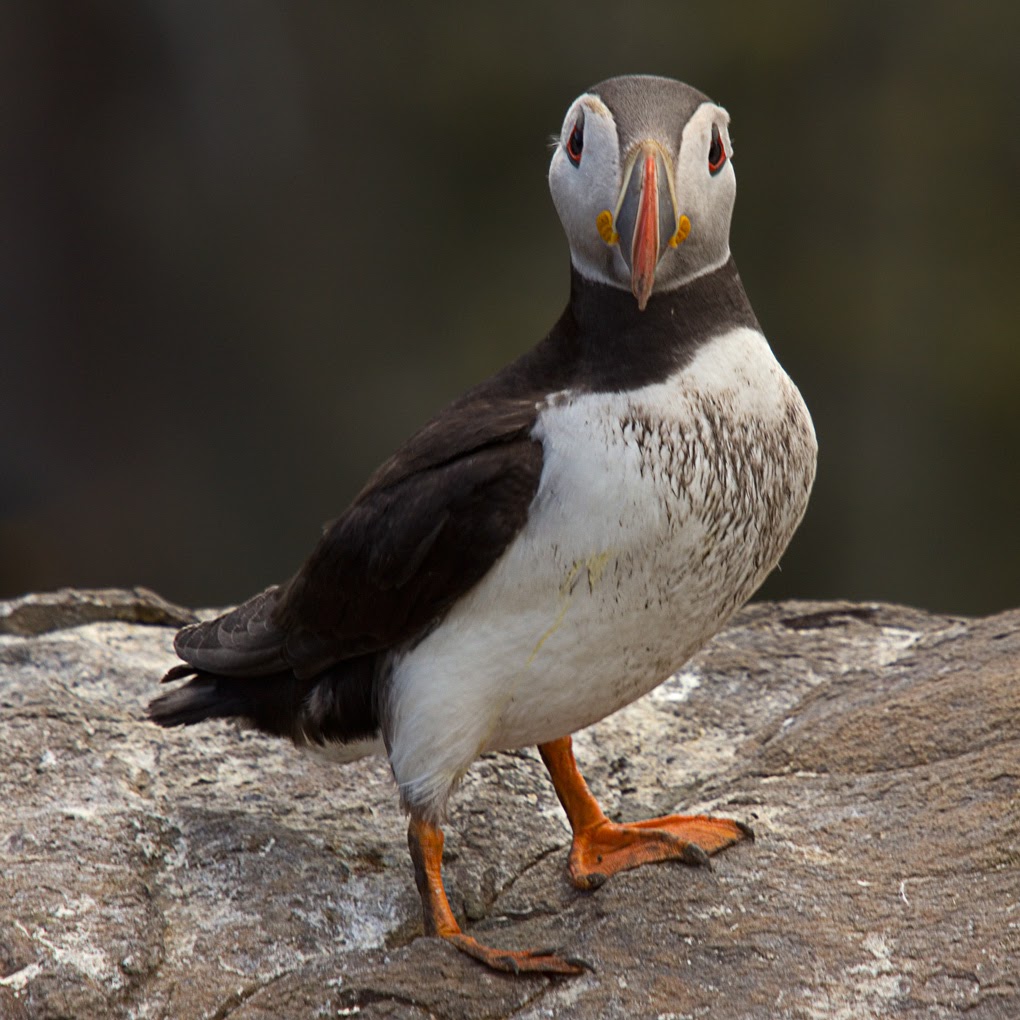
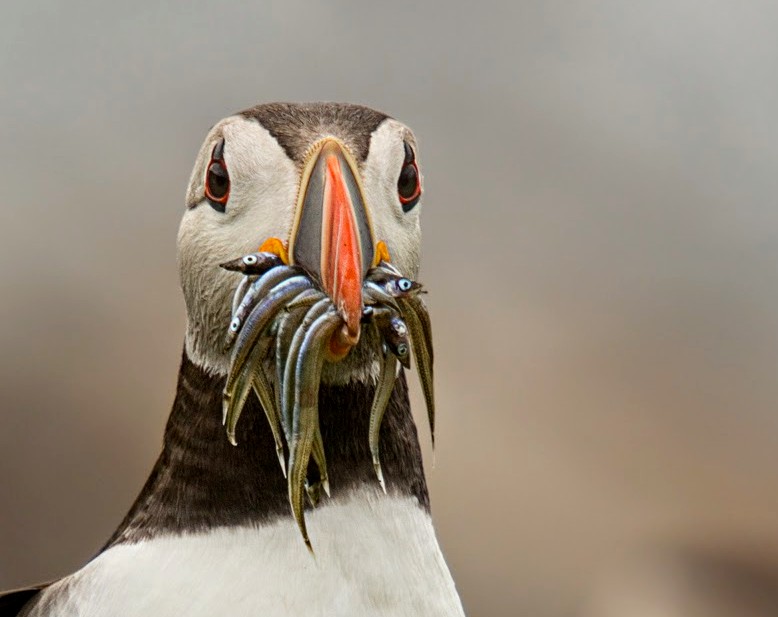
    Muddy puffin standing on rocks

    Of course the best time to see them is from May to July – and that’s certainly when you might expect some warm days and maybe even be tempted to take a dip in the sea for yourself.

    The beach at Flamborough North Landing is pleasant and sheltered. There’s a good car park, cafes, shop and the best ice cream cone 99s in Yorkshire. The walk from here round to the lighthouses offers some of the best opportunities to see puffins, as well as kittiwakes, razorbills, guillemots and more. I have also seen dolphins off the coast and the sight of gannets flying past on their way to or from their feeding grounds and their nest sites at Bempton is wonderful.

    Sea Hunter – Songs of Field and Garden

    In March the orchids might just be coming out along the clifftops along with the daffodils or course.

    The puffins themselves inspired me to write my first book –
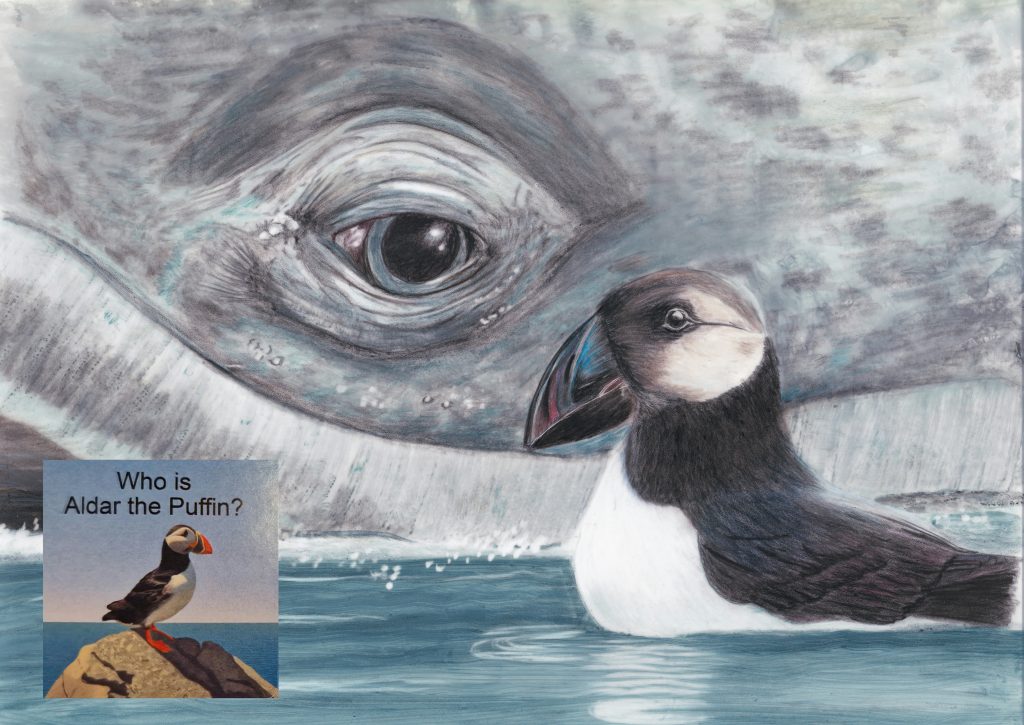
    Aldar, A Puffin’s Tale

    An Image from the book Aldar, A Puffin's Tale
    An Image from the book Aldar, A Puffin’s Tale

    So, despite the gloom of another wet day, the cold, the mud and the seemingly endless winter, there is light at the end of the tunnel. Days of ice cream and sun, the glorious views and the search for puffins on the limestone cliffs all accomanied by the sound of the kittiwakes and the gulls.
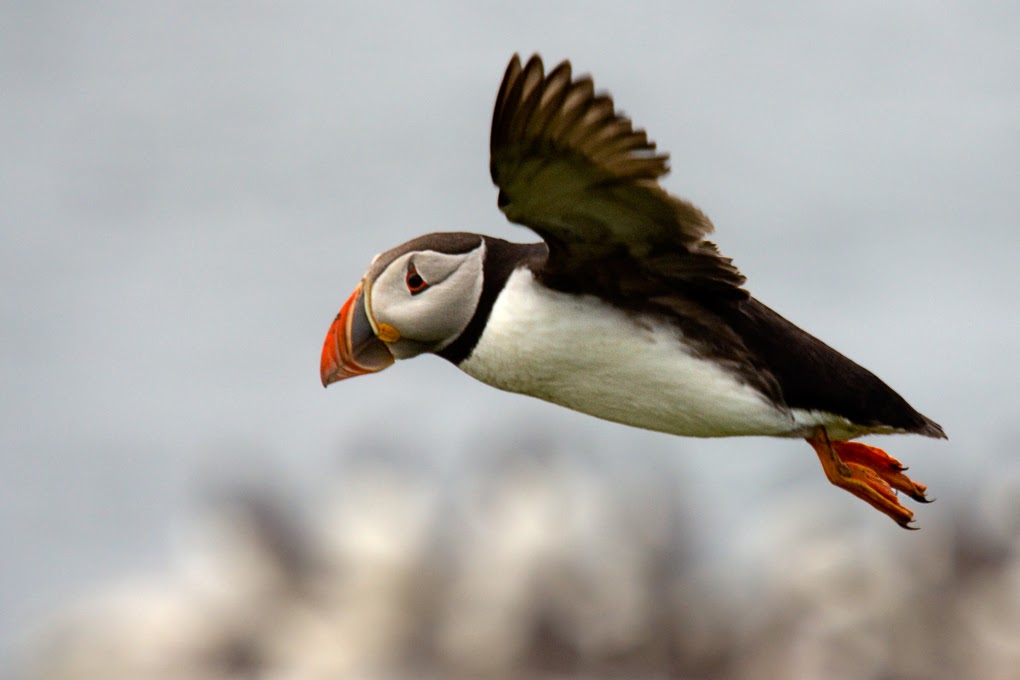
    Flying Puffin
    A puffin prepares to land.
  • An Albatross in North Yorkshire

    An Albatross in North Yorkshire

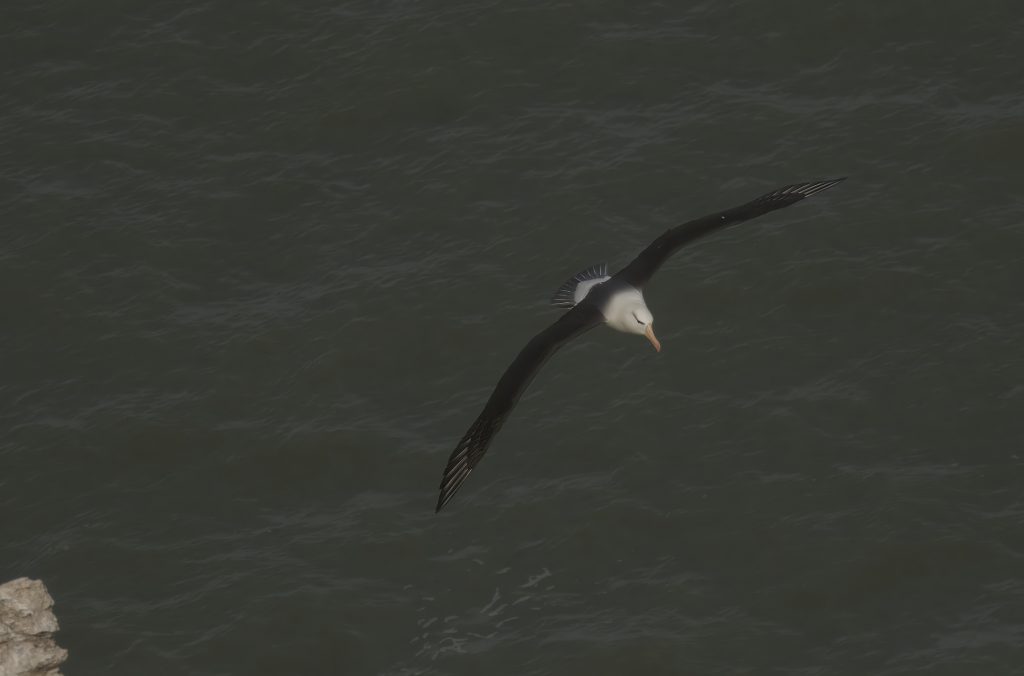
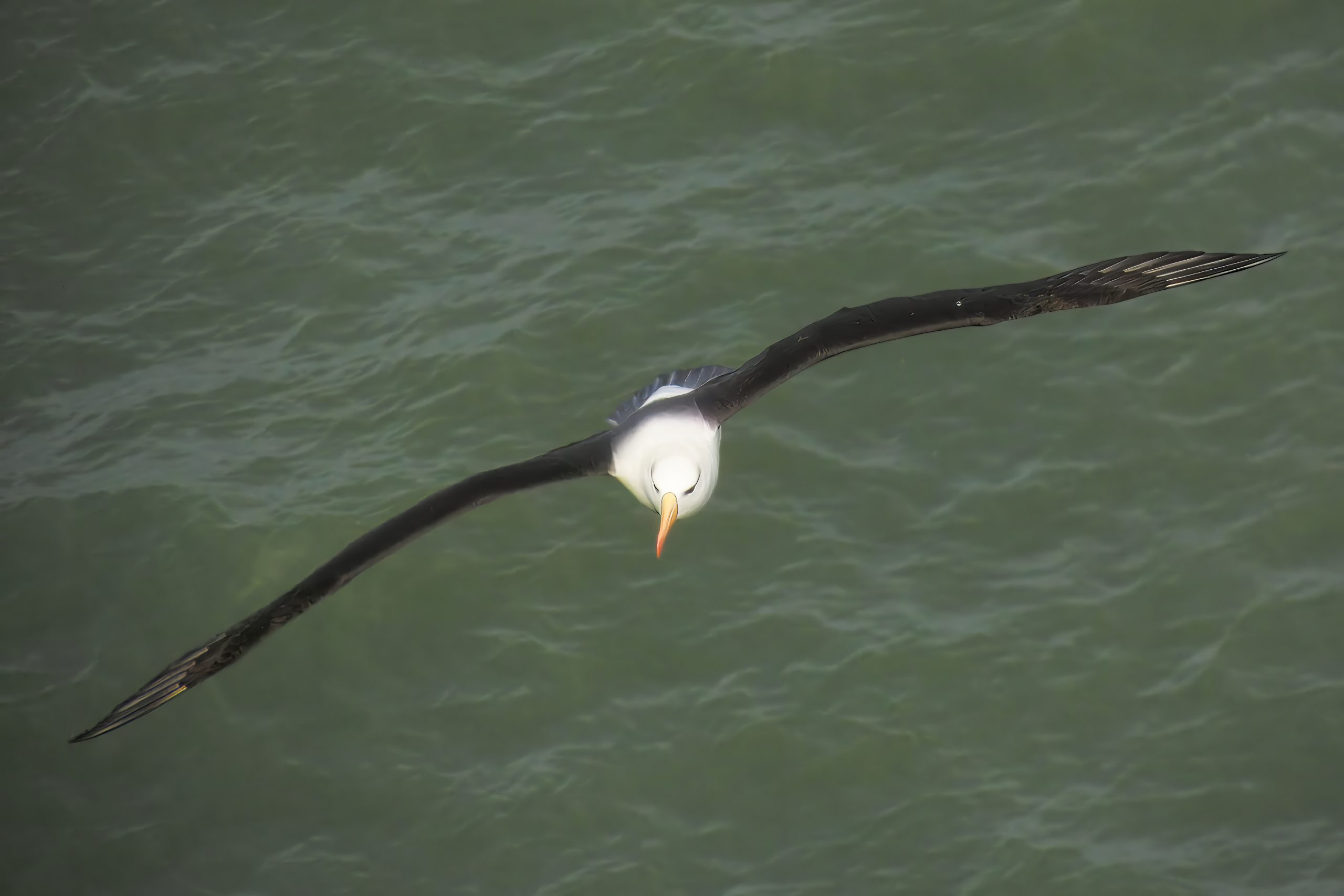
    Some years ago I was lucky enough to capture some photographs of Albie the Albatross as he was named by RSPB Bempton Cliffs.

    This wonderful, stately seabird had been seen at Bempton on and off since 2017 when he first appeared, having been present in the Baltic from 2014. He was absent for a few years after 2017 but also visited in from 2020 to 2022.

    Albie the Albatross in flight near Bempton

    I first saw him in June of that year but, after a long day photographing puffins at North Landing, my camera battery gave out just as he put in an appearance. Not to be outdone I invested in a couple of spares and revisited a few weeks later.

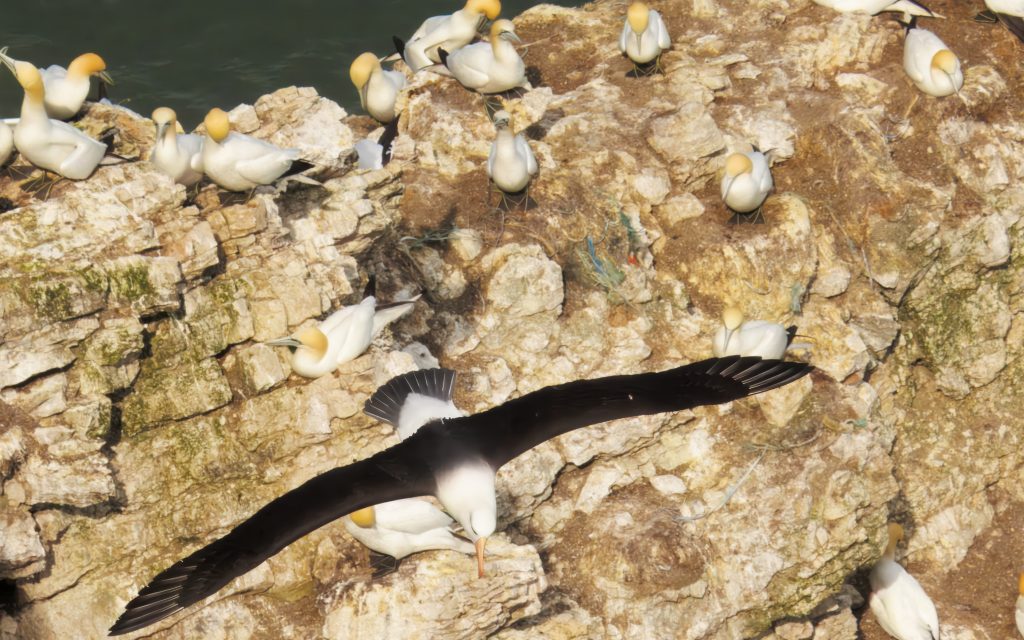
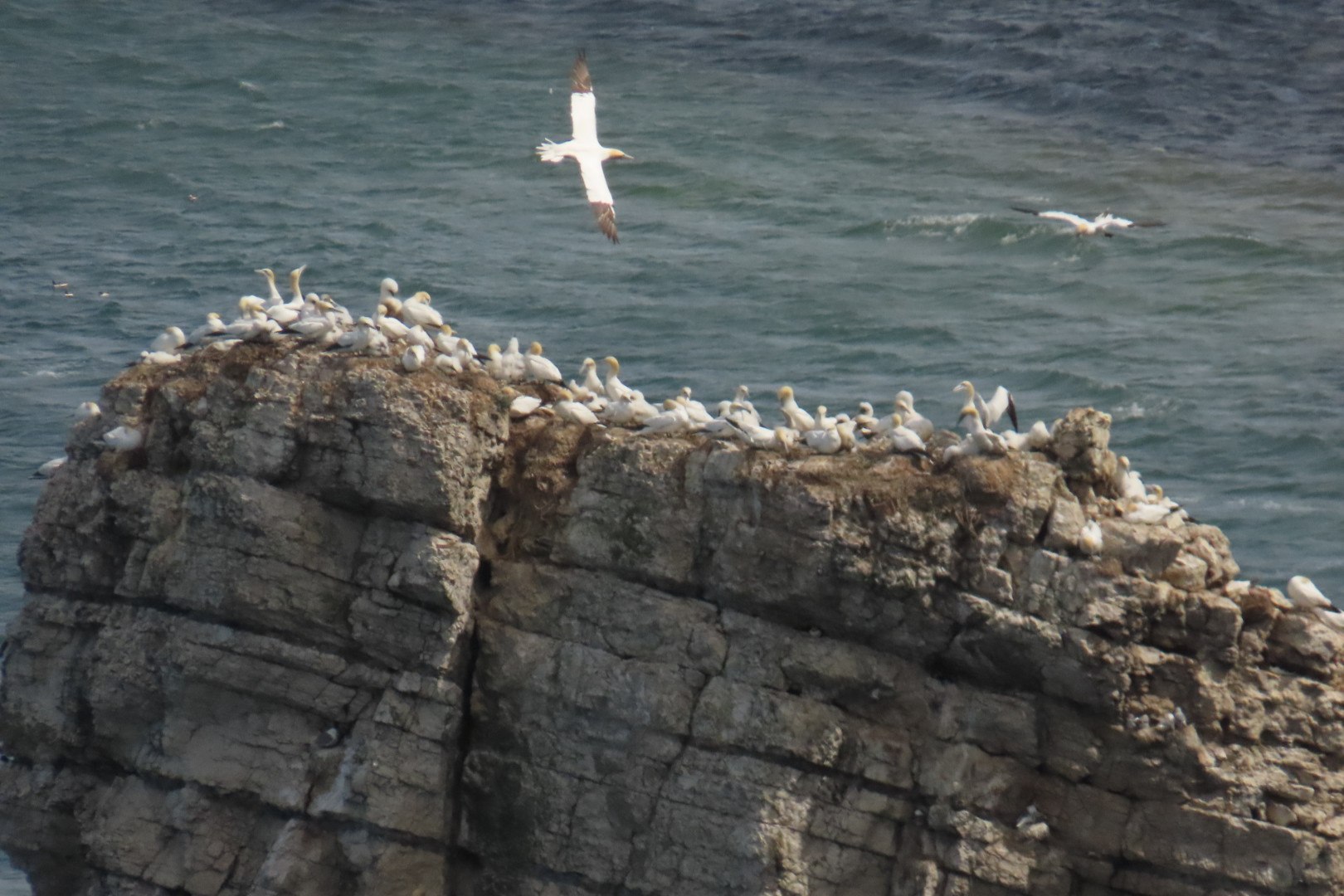
    The crowds were significant but I was lucky enough to catch sight of him not only where most were gathered near the main Gannet colony, but just a little further north along the clifftop where he put on a spactacular show just for me.

    The normal range for the Black Browed Albatross is in the southern ocean, around remote islands including the Falklands, the Chilean islands and South Georgia in the breeding season (September – April) and at sea the rest of the year.

    They are a medium sized albatross with a 2-2.4m wingspan and and length of around 90cm.

    Albie flying over the Gannet colony at Bempton Cliffs
    Albie flying over the Gannet colony at Bempton Cliffs

    As with all Albatrosses they are adapted to gliding on the wind, which they rely on for lift. They do not often cross the equator where winds are usually calm or non existant, it is thought Albie will have been blown off course and into the northern hemisphere during a storm. Once here it would be difficult for the bird to return south for the same reason they do not normally venture north. Albatrossed posses a specialised bone structure between the wings on their backs, this allows them to “hang” the bones of the wings on a small hook meaning that they do not need to consume energy to keep them extended.

    Sadly Albie disappeared, from both the UK and his normal winter range in the Baltic, after 2023 and it is presumed he died. We were privileged to see such a magnificent bird around the shores of north yorkshire.

    I saw, and was able to photograph, several other species of Albatross on a visit to New Zealand – more of that later.

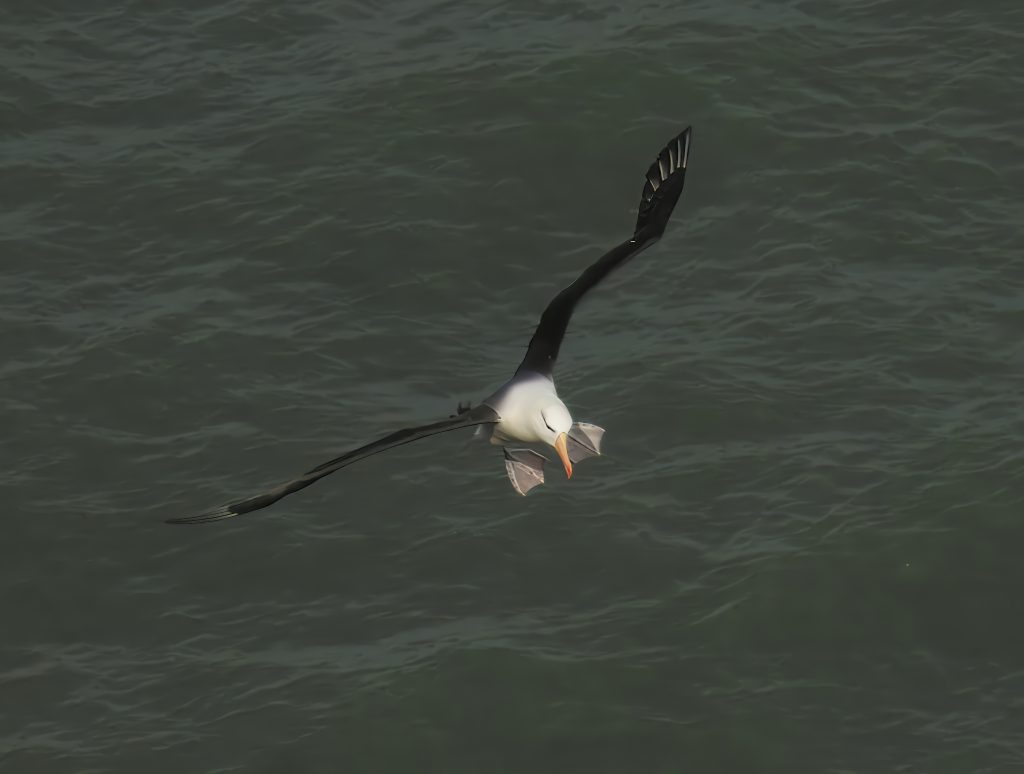
    Albie the Albatross manouvres off the cliffs at Bempton
    Albie the Albatross manouvres off the cliffs at Bempton
  • Sea Hunter

    Sea Hunter

    The Circle Turns

    A line of white weaves across the sky,
    a sinuous wave
    reflects the swell below.
    Drawn closer they resolve
    a chequerboard
    of ivory and sable,
    Rendered clear by gathering age.

    Raucous din repeats,
    Noise washing over all.
    Males flex wings and raise
    sun washed heads
    to dance
    as if no-one sees.
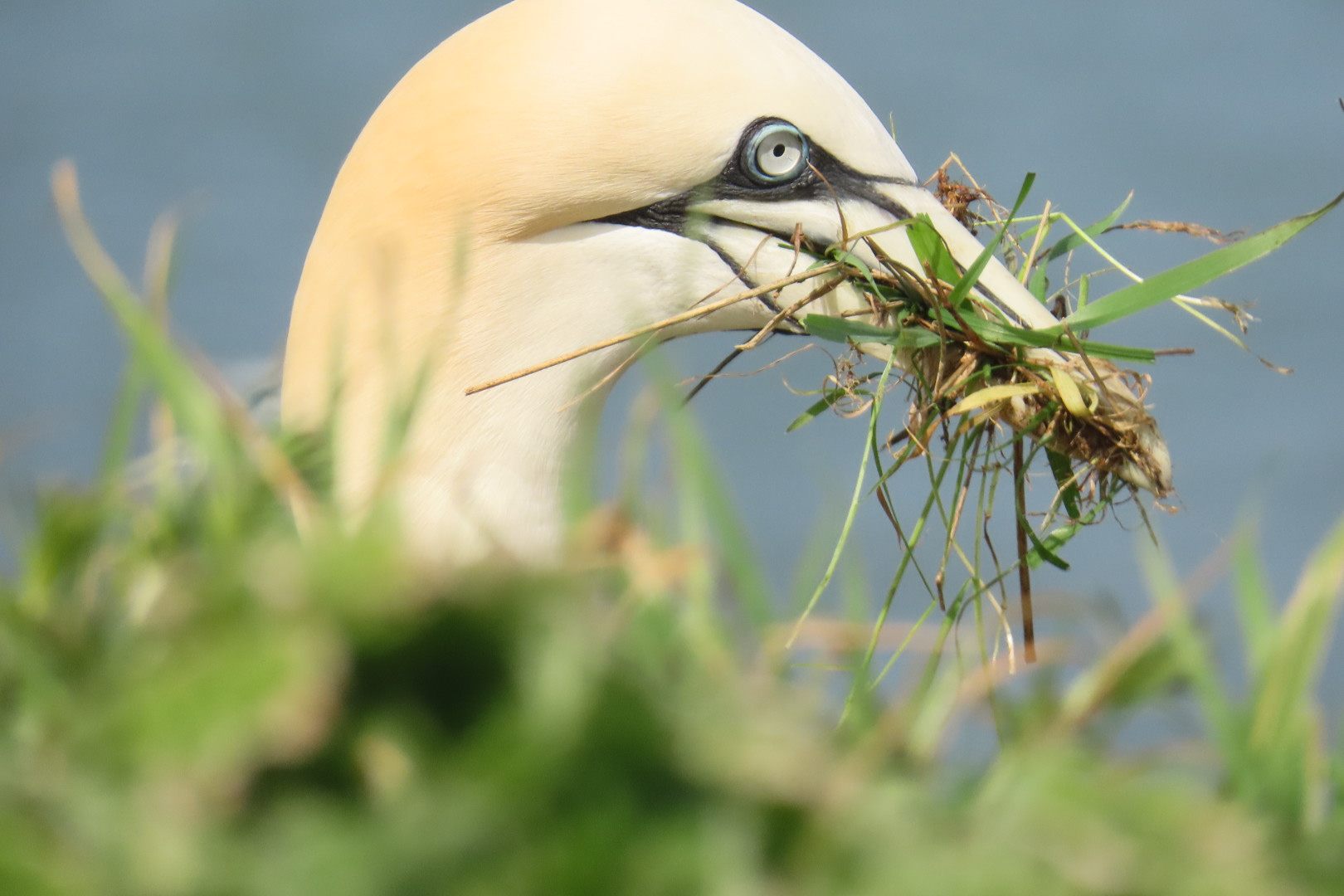
    Or gather grass,
    uncaring close beneath our feet.

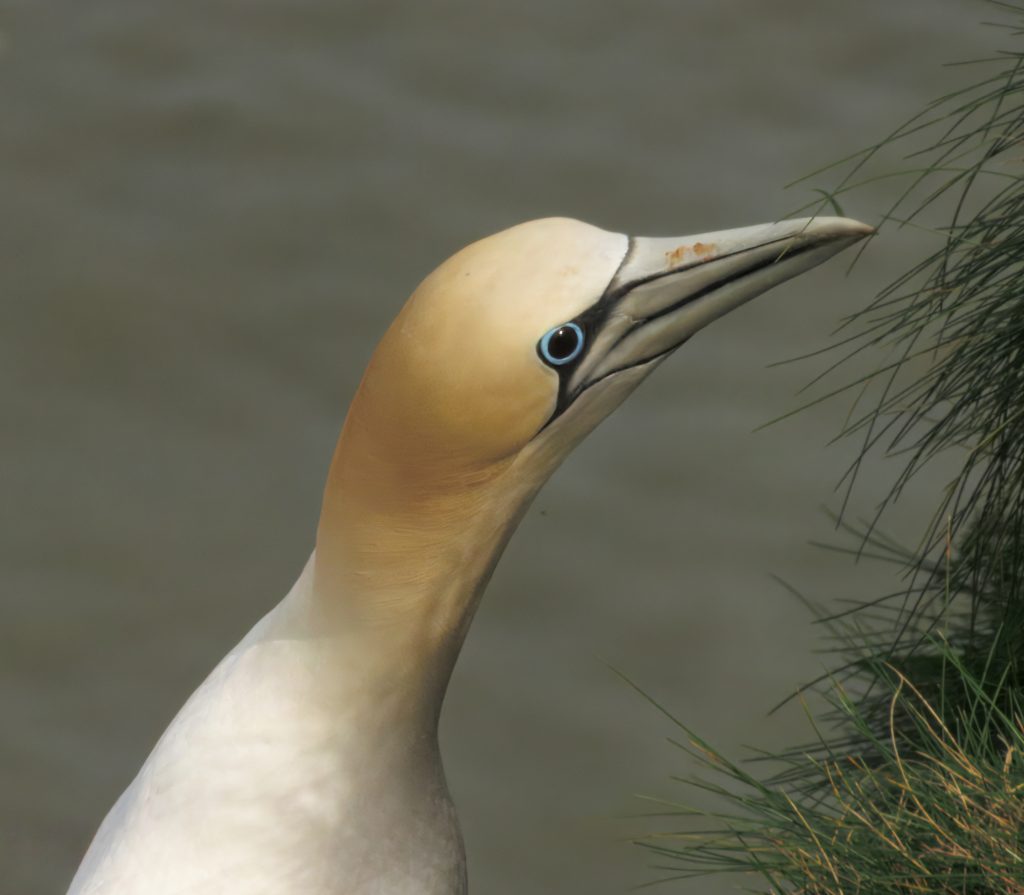
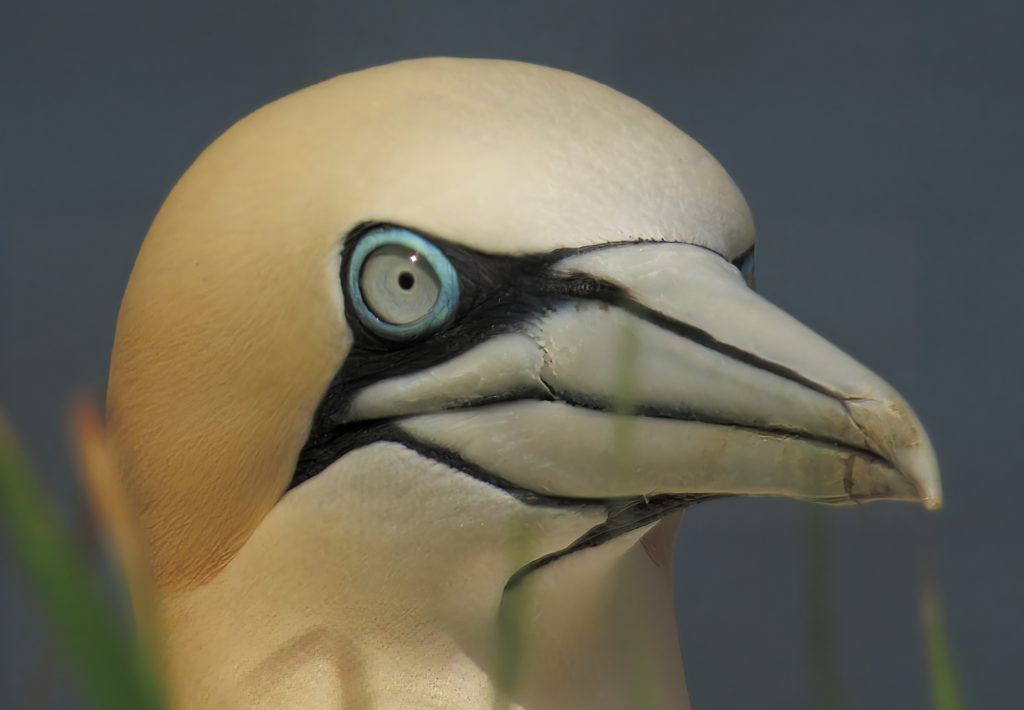
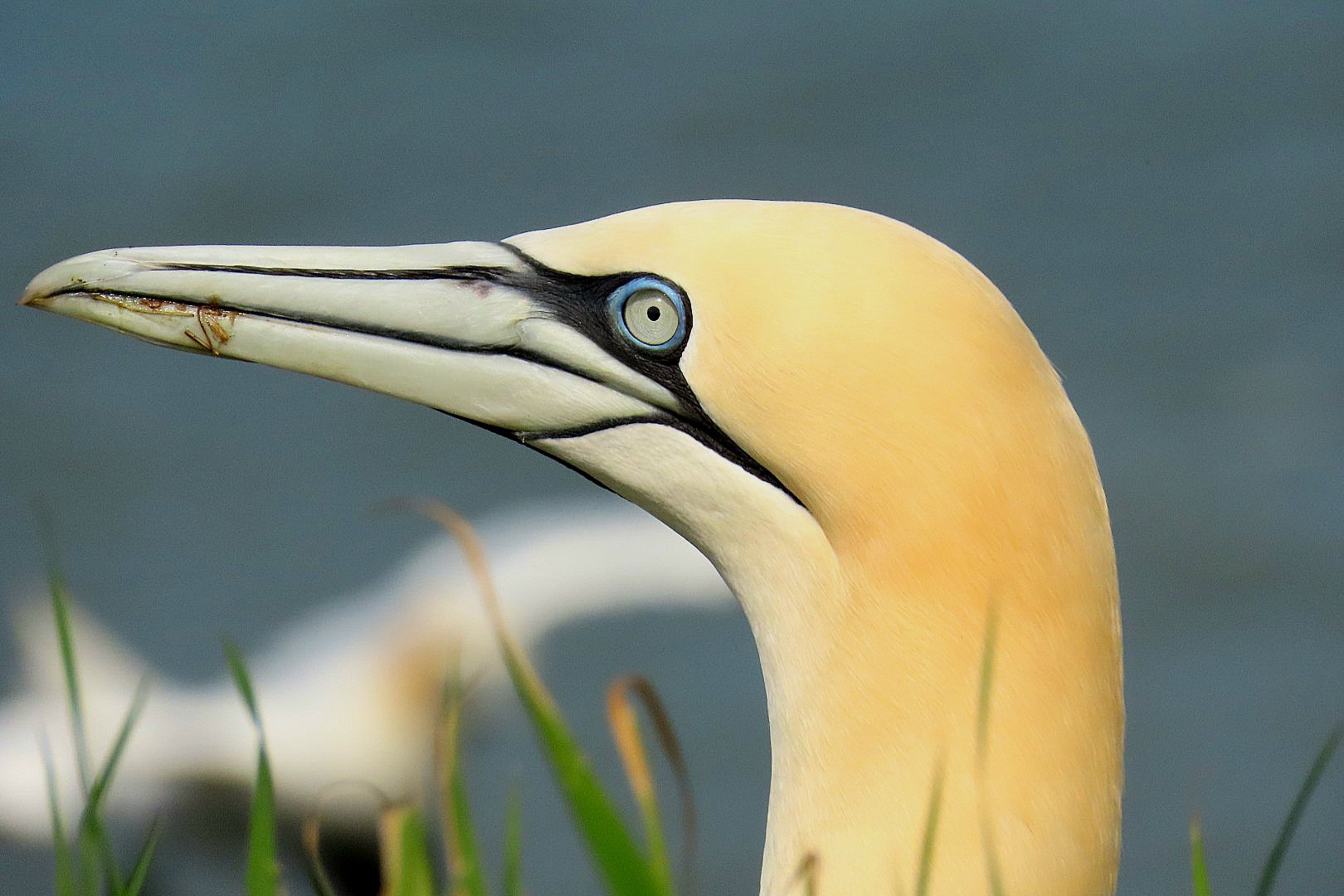
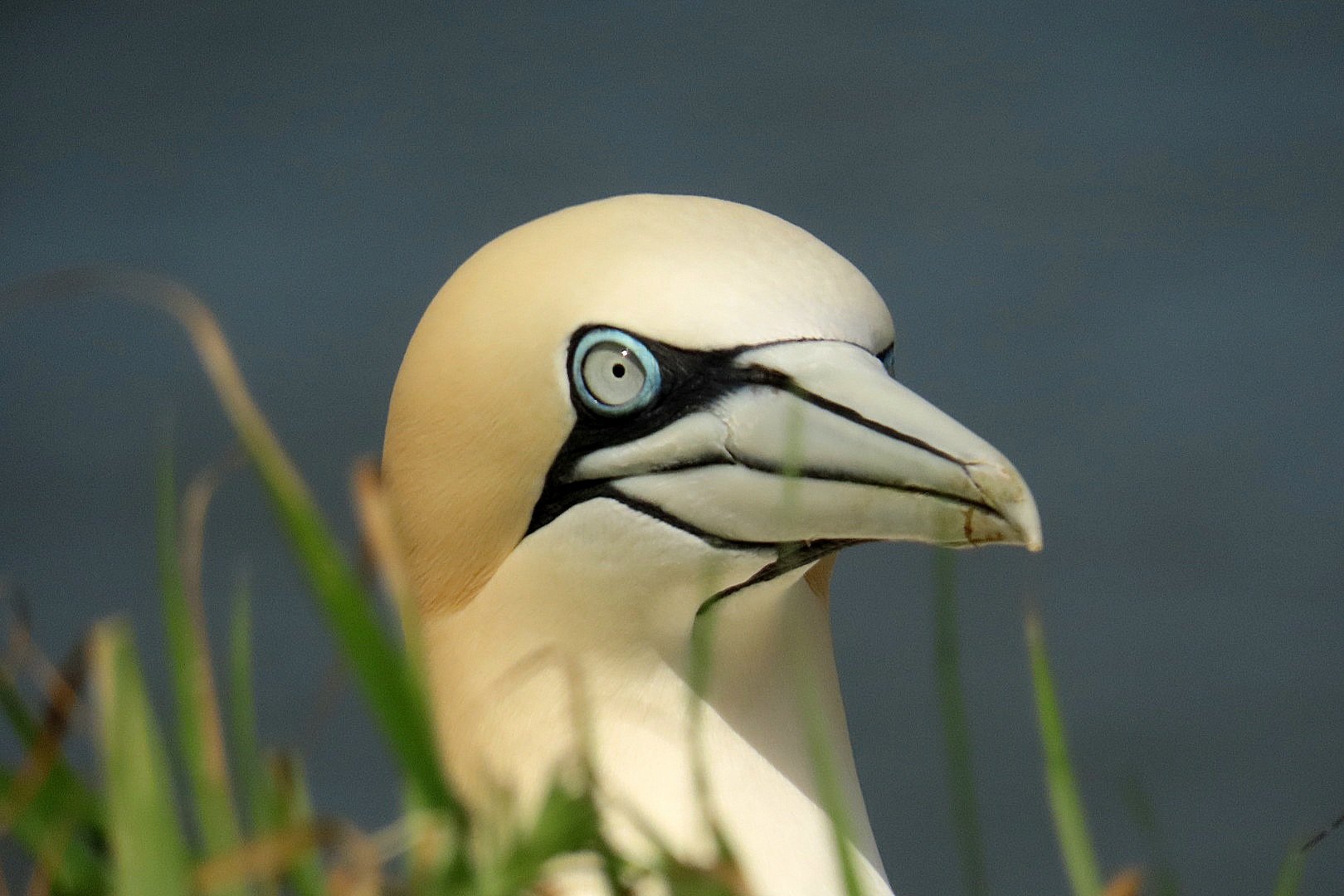
    Azure ringed orbs
    Of midnight centred white.
    Black on black, survival’s legacy.

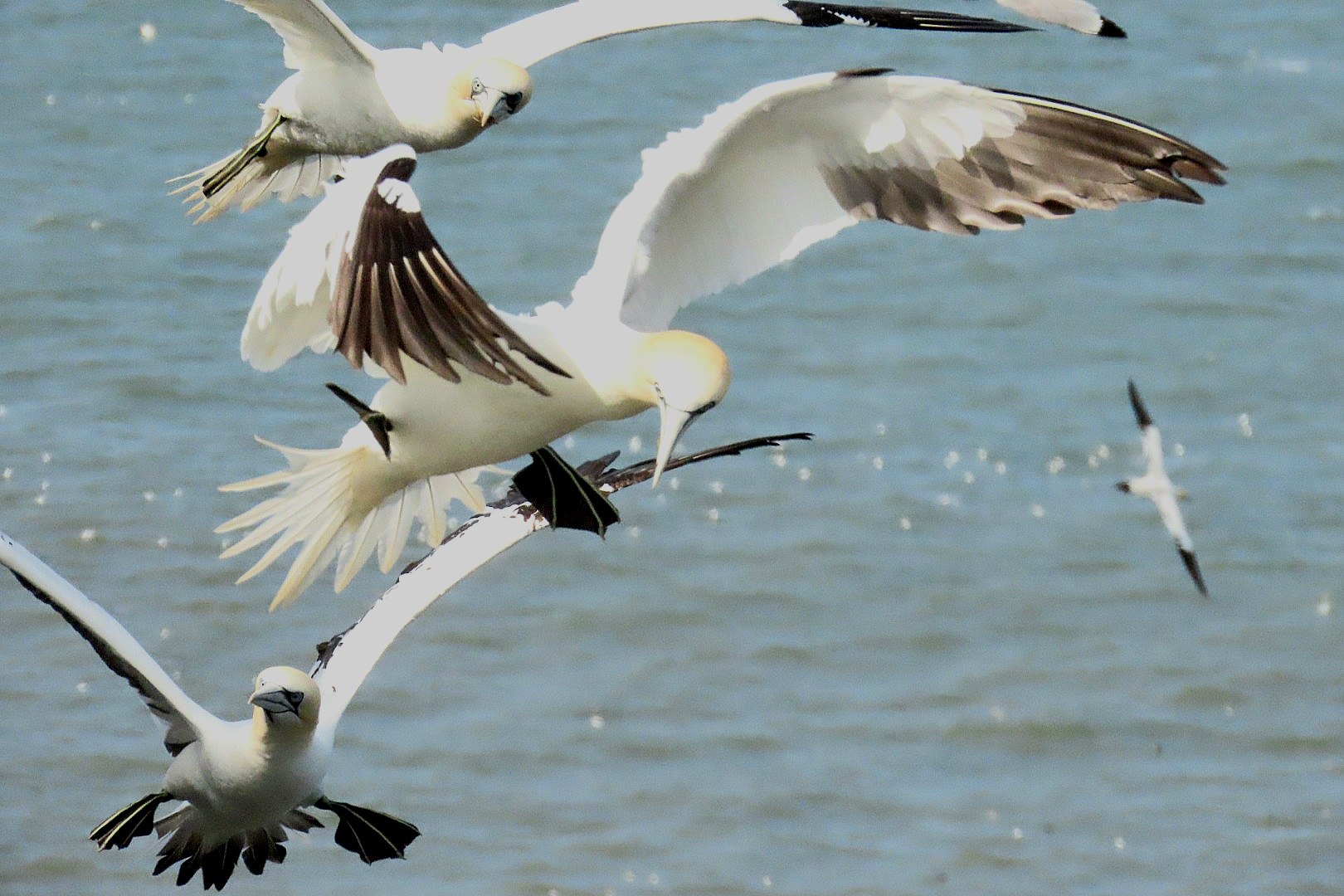
    From circling sky a hunter falls,
    Plunging without fear.
    Wings back, legs tucked,
    A living fishing spear.
    To pierce the waves, to reach the depths,
    A thrust, a miss, so near.

    the surface regained,
    Ungainly now, a fleeting loss of grace.
    An effort
    to reclaim the air,
    To pull, to climb,
    to soar once more.
    The hunter returns, the circle turns.

    Copyright Steve Allanson February 2026

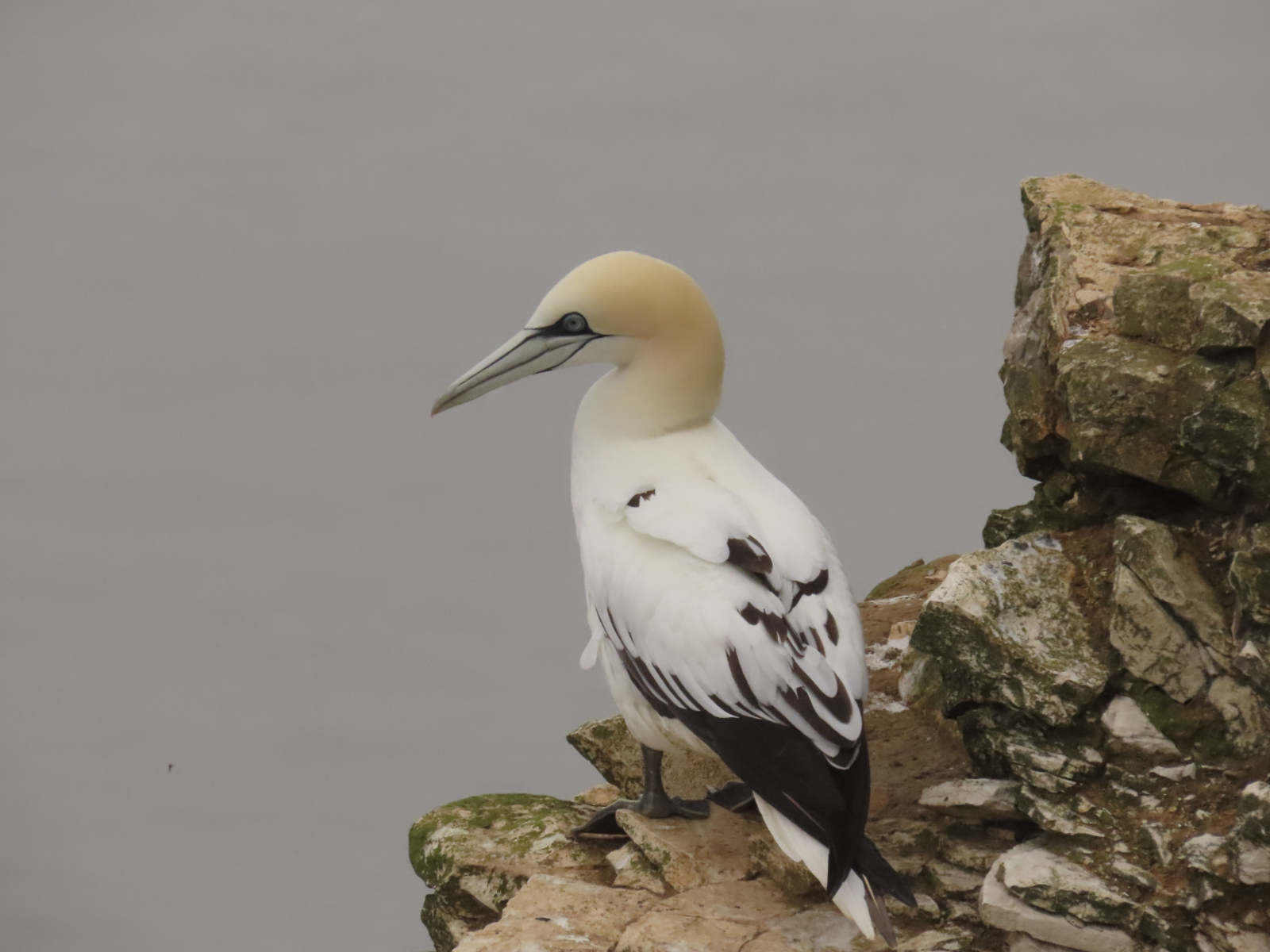
    I often travel to Flamborough or Bempton in the breeding season to watch these magnificent birds. They are overshadowed in popularity by the delightful puffins but they deserve their own place in our consciousness.

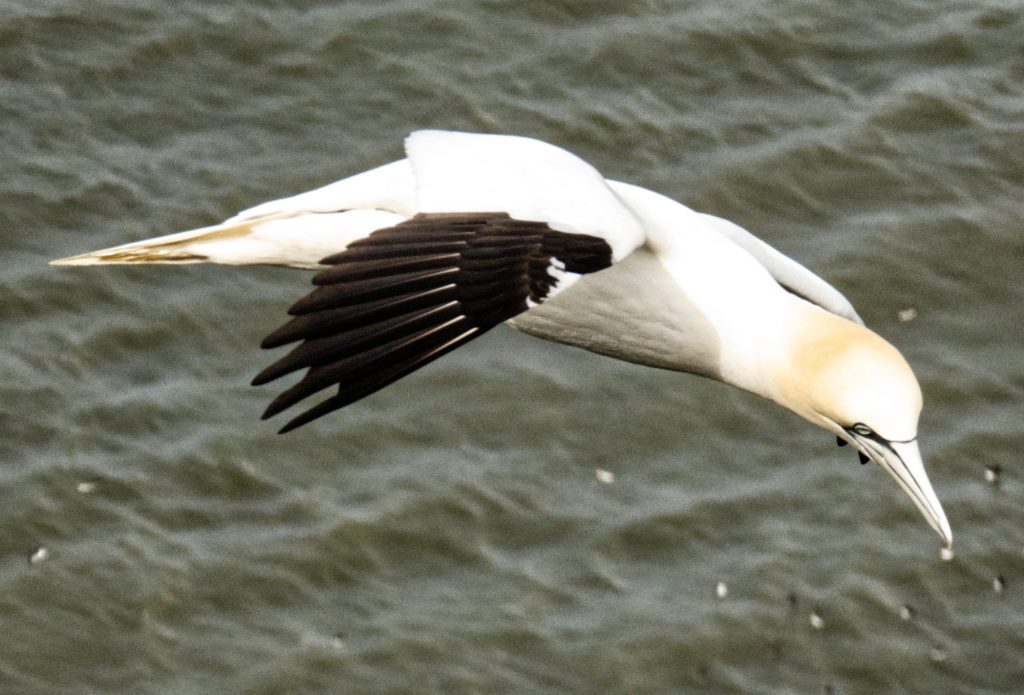
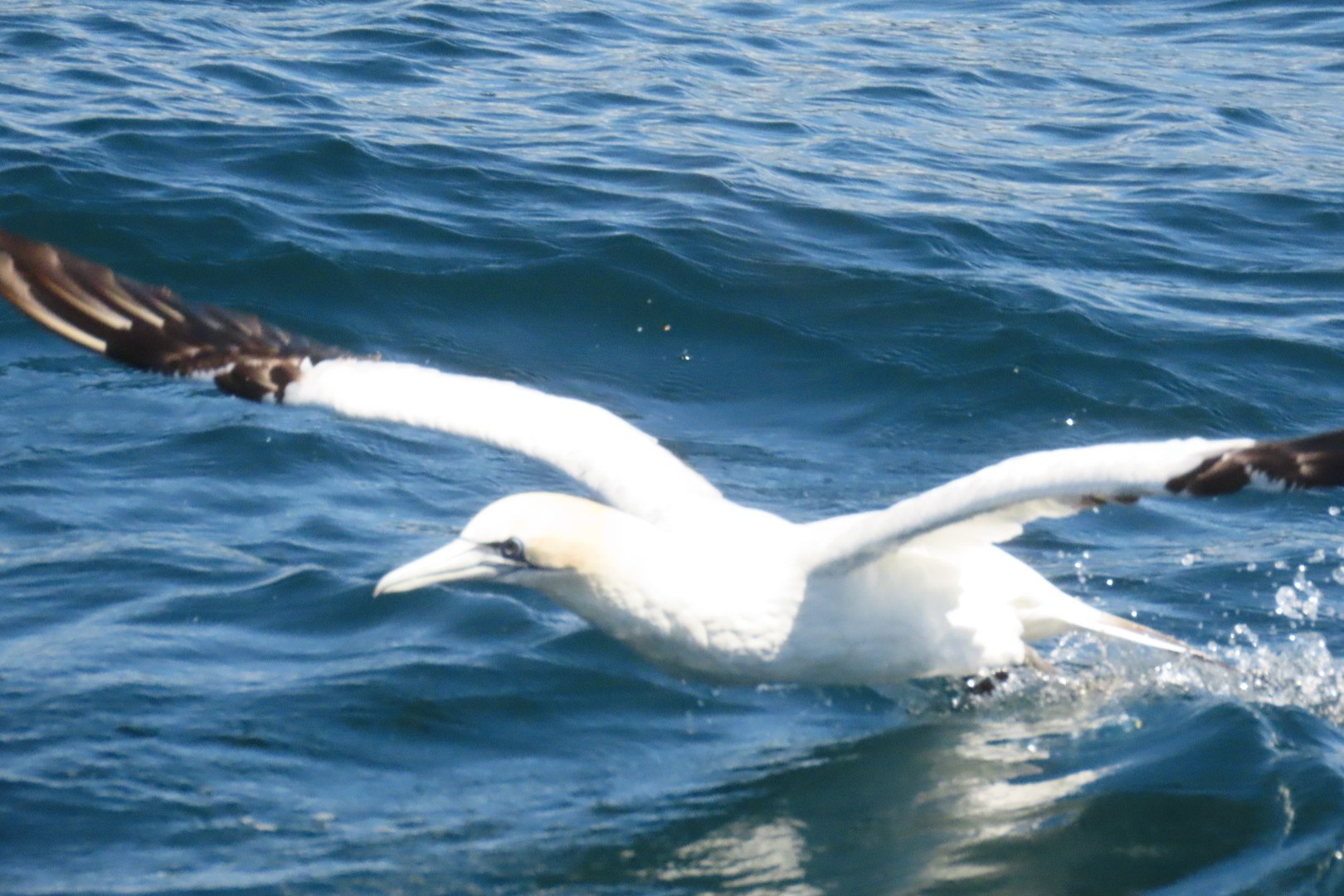
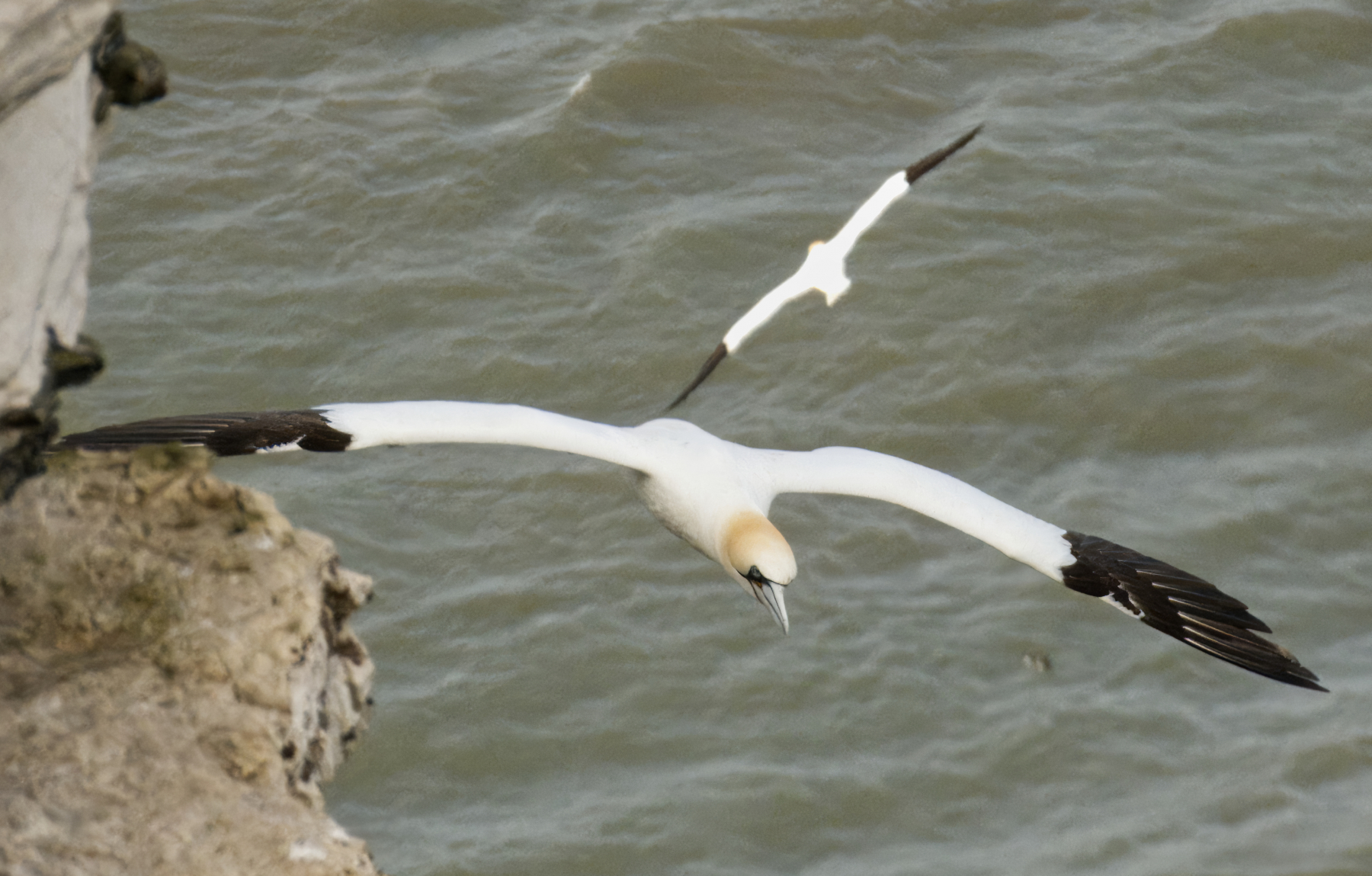
    Gennet in flight, Bempton UK
    Gannet in flight, Bempton, UK

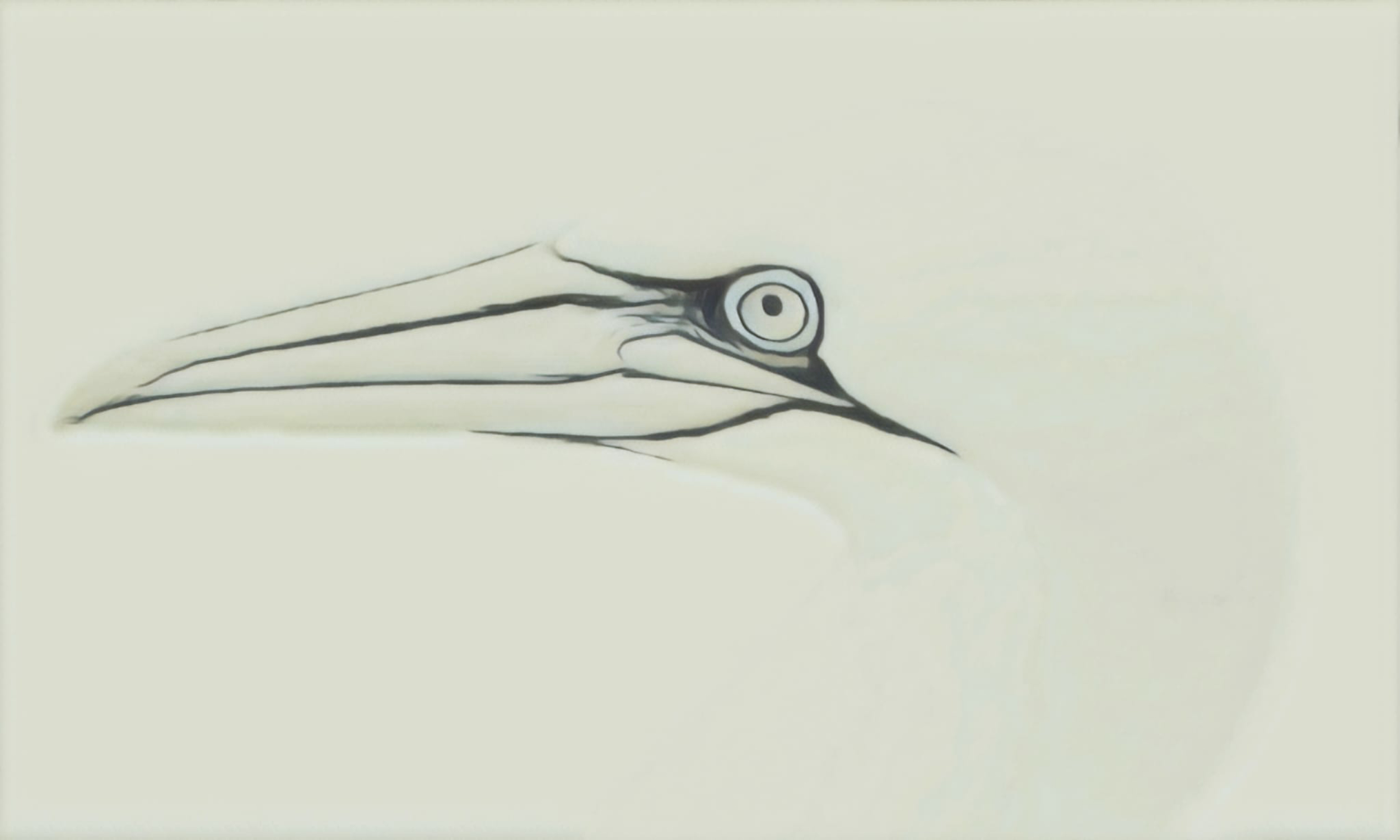
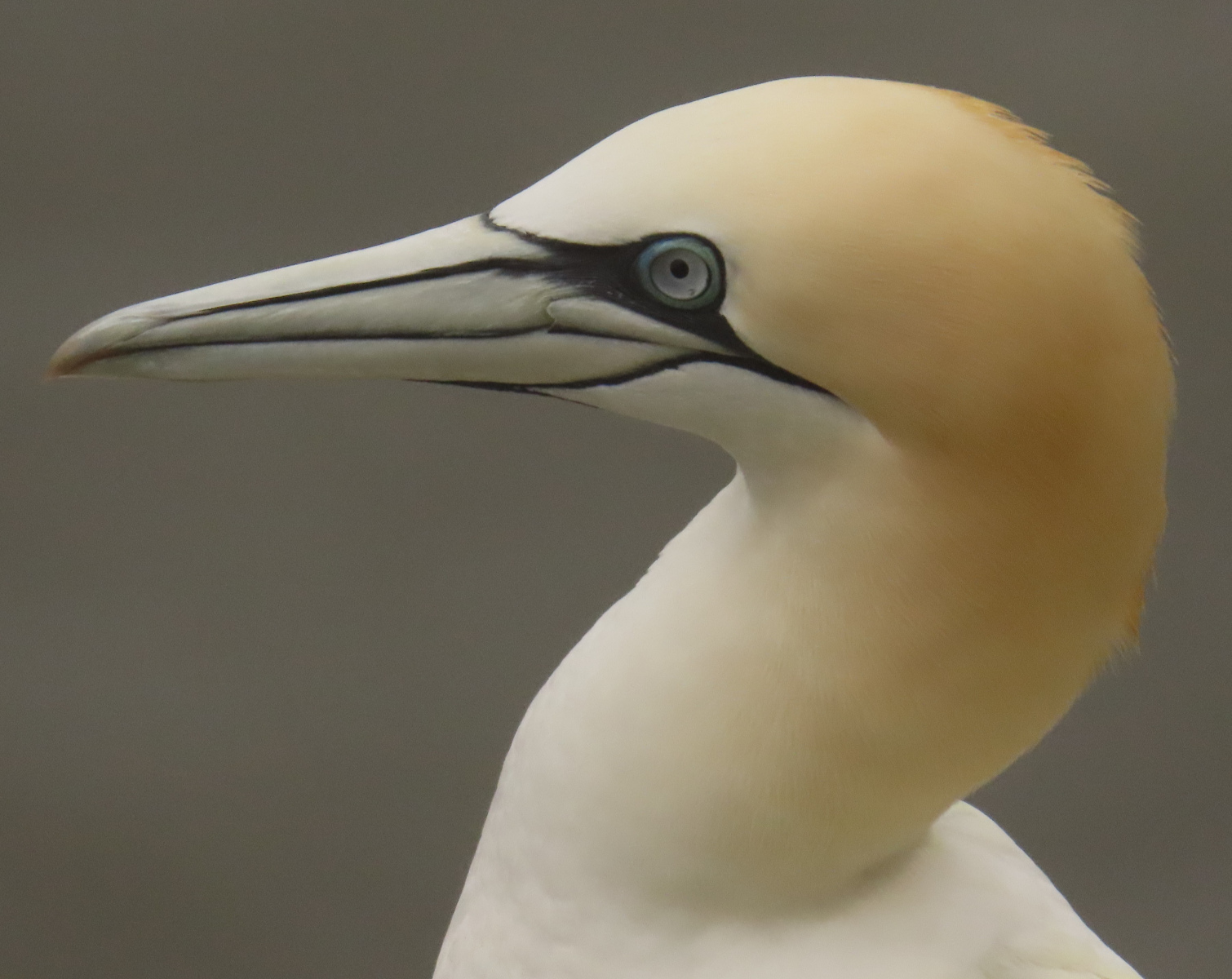
    In recent years, avian influenza has devastated gannet colonies across Britain. Survivors can be identified by the loss of the distinctive pale iris—their eyes turn entirely black. ‘Black on black, survival’s legacy.’

    Majestic, striking, the gannet is a large bird and unafraid of humans. In fact, if you see them gathering nesting material along the clifftops at Bempton – mere feet from the crowds watching and filming them, you might come to the conclusion that they dismiss our presence as irrelevent.

    In folklore they are often seen as messengers of the sea, signals – of course – of the presence of fish. They are seen as symbols of endurance and resilience, as well as of commitment. Their hunting dive is one of total resolve; spearing the sea at speeds of nearly 100 kilometres per hour. Their reinforced skulls absorb most of the impact but, nevertheless, as they age their eyesight can suffer from the repeated shocks.

    Close up of the head of a gannet.

    There is a tale, which can be found in Adam Nicholson’s wonderful book “The Seabird’s Cry” which should, apocryphal or not, serve as a caution. It tells of a beach somewhere in the south of England where, when the tide is out, the exposed wet sand can appear from above as a continuation of the nearby open water. The gannets, apparently can make this mistake and dive to crash into the sand and injure or kill themselves.

    The story tells of a man who, coming across an injured bird, picks it up in the hope of taking it somewhere for assistance. He sensibly took the head in his hand as he carried the bird, but was distracted by a dog yapping at his heels and let go – at the cost of an eye!

    That beak is razor sharp.

    Let’s hope the bird recovers from the impact of Bird Flu, and survives the other challeges we throw at it (Plastic in the sea, getting tangled in fishing gear, climate change) so that we may continue to admire it.

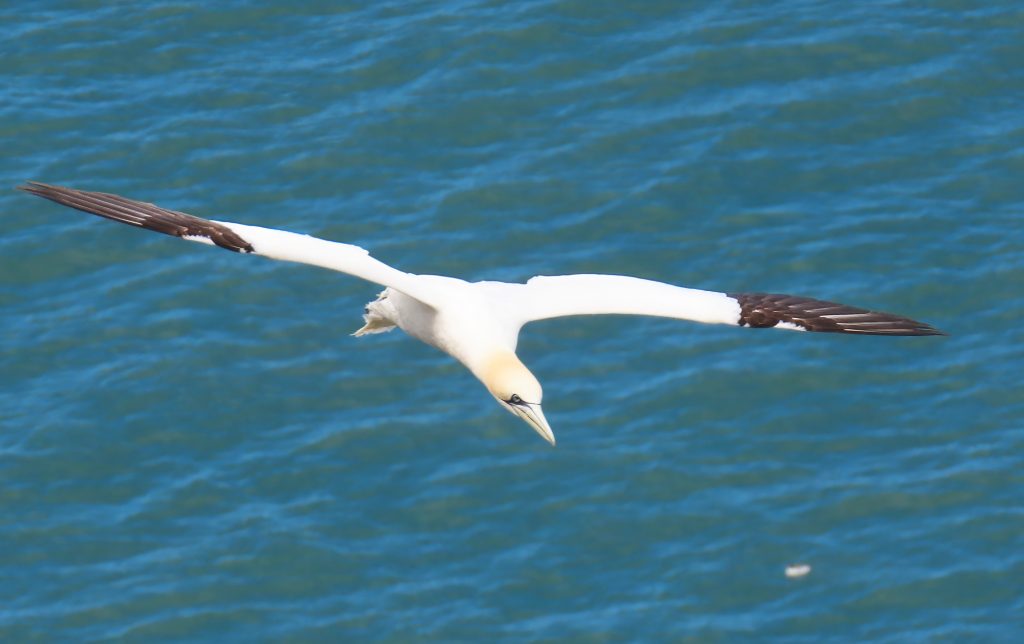
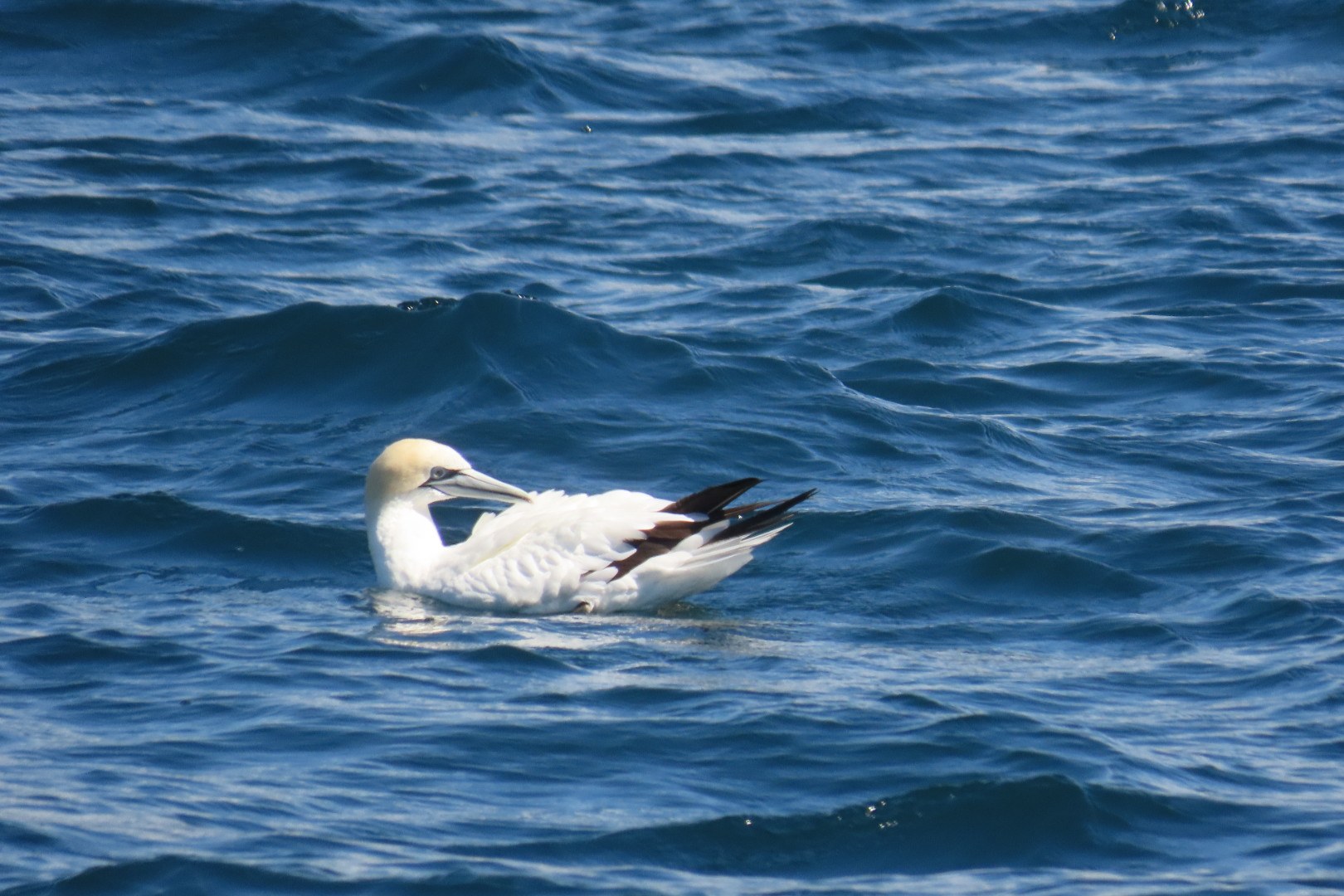
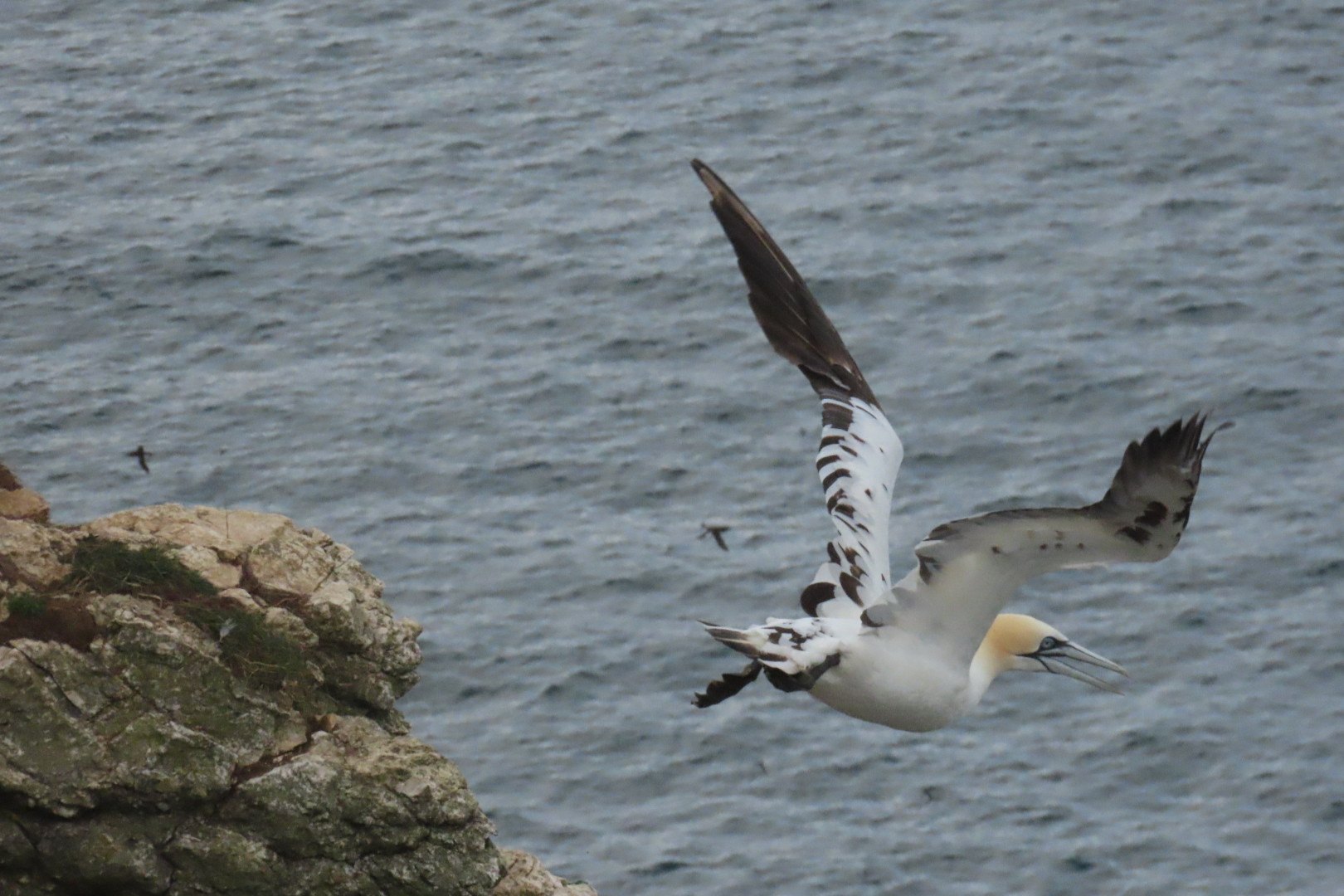
    Gennet in flight over the sea.
    Gannet in flight over the sea of Filey Bay.